
⸻
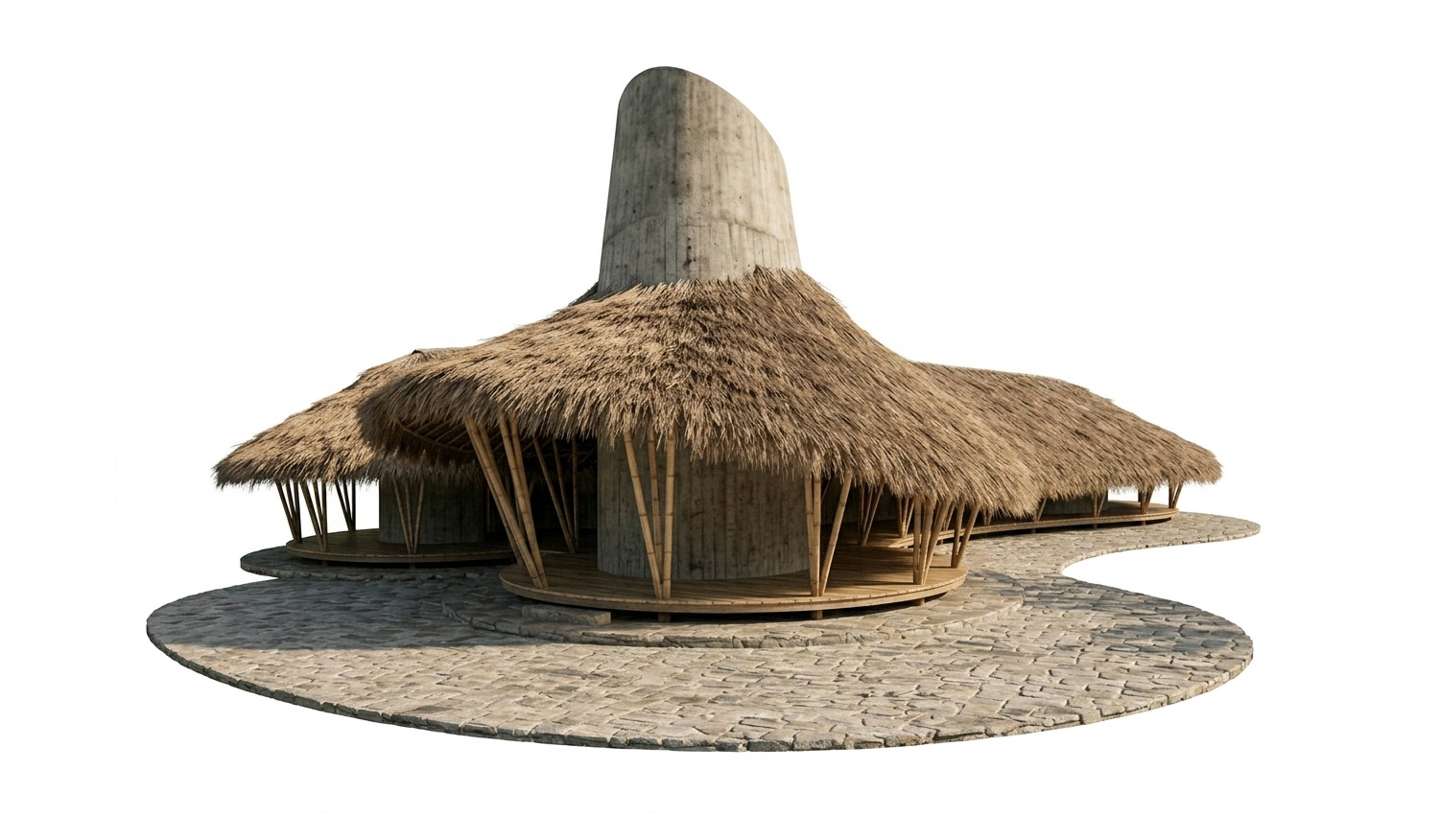
Cabin unit — resort on Siquijor Island, the Philippines
Filipinos call Siquijor the island of fire — the island of healers, a place where it is still believed that matter holds memory.
This house is about exactly that: the memory of matter.
⸻
⸻
It begins with a pile. Bamboo canes, palm and banana leaves are heaped into a dense, accidental mound — the kind no one designs, because it cannot be designed.
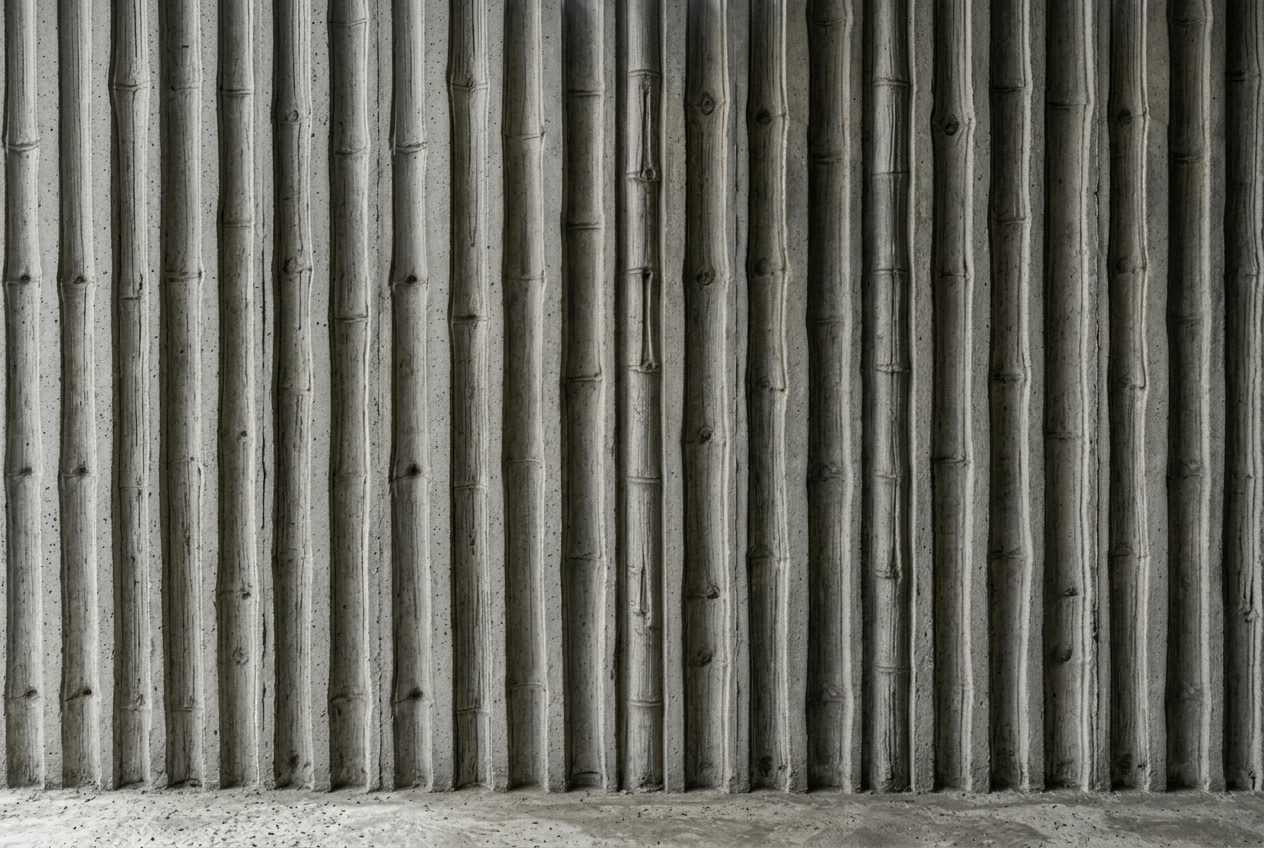
Formwork rises around it, and concrete is poured in. Once the concrete sets, the timber trapped inside is burned away. What remains is the smell of smoke, the dark, charred skin of the walls, and a precise, inverted imprint of the jungle that once grew here.
The core of the building is a negative — a cast of everything that had to be removed for it to exist.
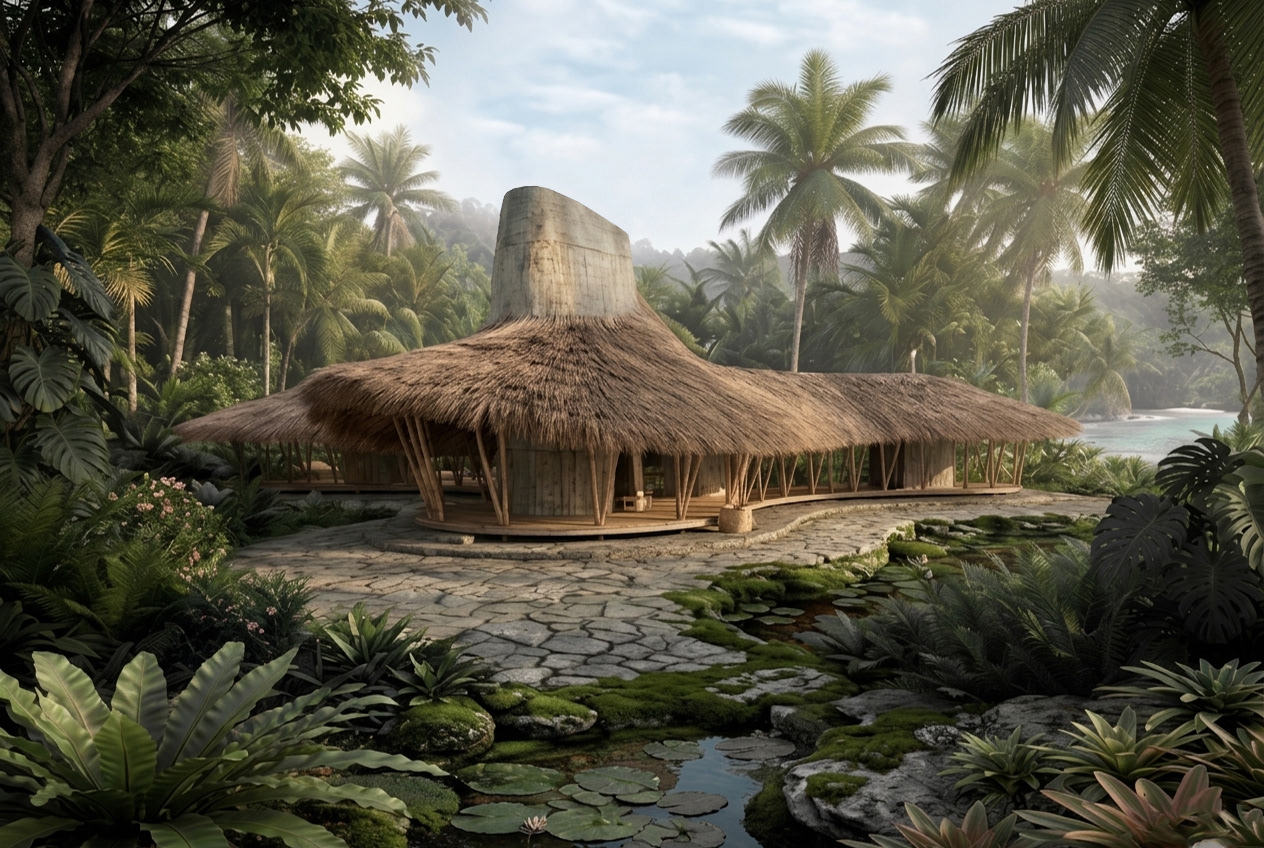
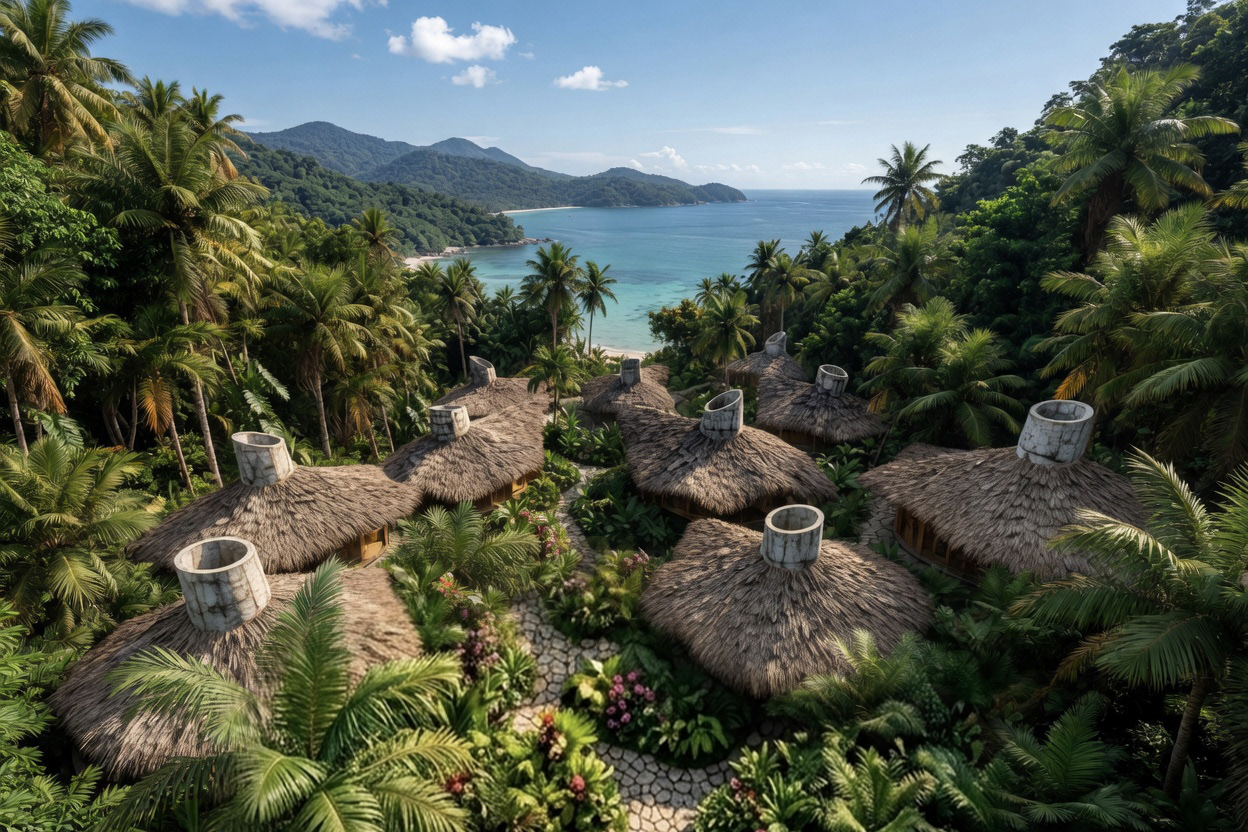
This core is a concrete mass with an oval, lens-shaped section, tapering as it rises — something that seems to have grown rather than been built. It stands tall enough for its interior to stratify vertically.
⸻
⸻
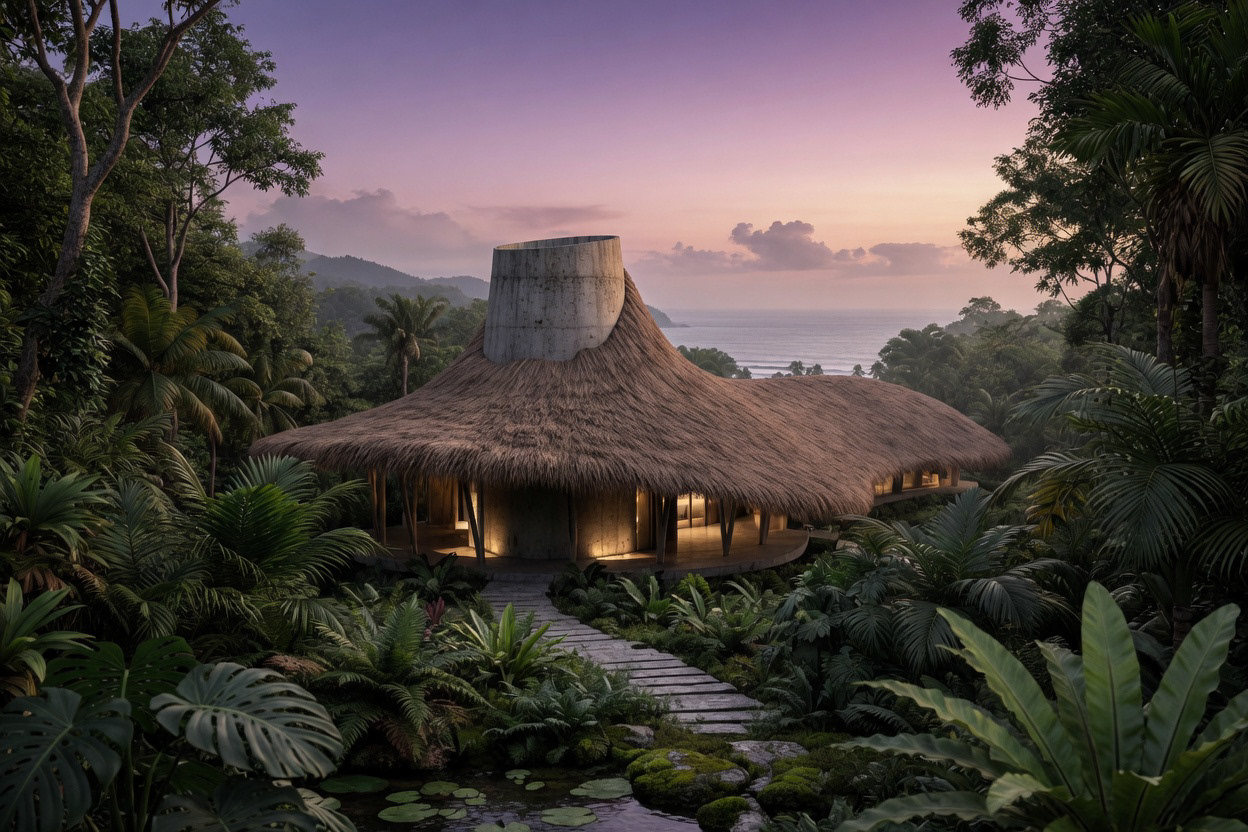
Shared life lives at the bottom: the living room, the space where you are together; the kitchen is set into the outer wall of the core, open to the green.
Higher up, where the walls draw in and the light turns softer, lies what is most one's own — the part of the house you enter to rest, the part that needs no nameplate on the door.
The core does not close at the top. The upstairs bathroom opens to the sky: by day a vertical shaft of light falls through that circle, by night — rain, or stars. Here, bathing becomes something closer to ritual than to hygiene.
⸻
⸻
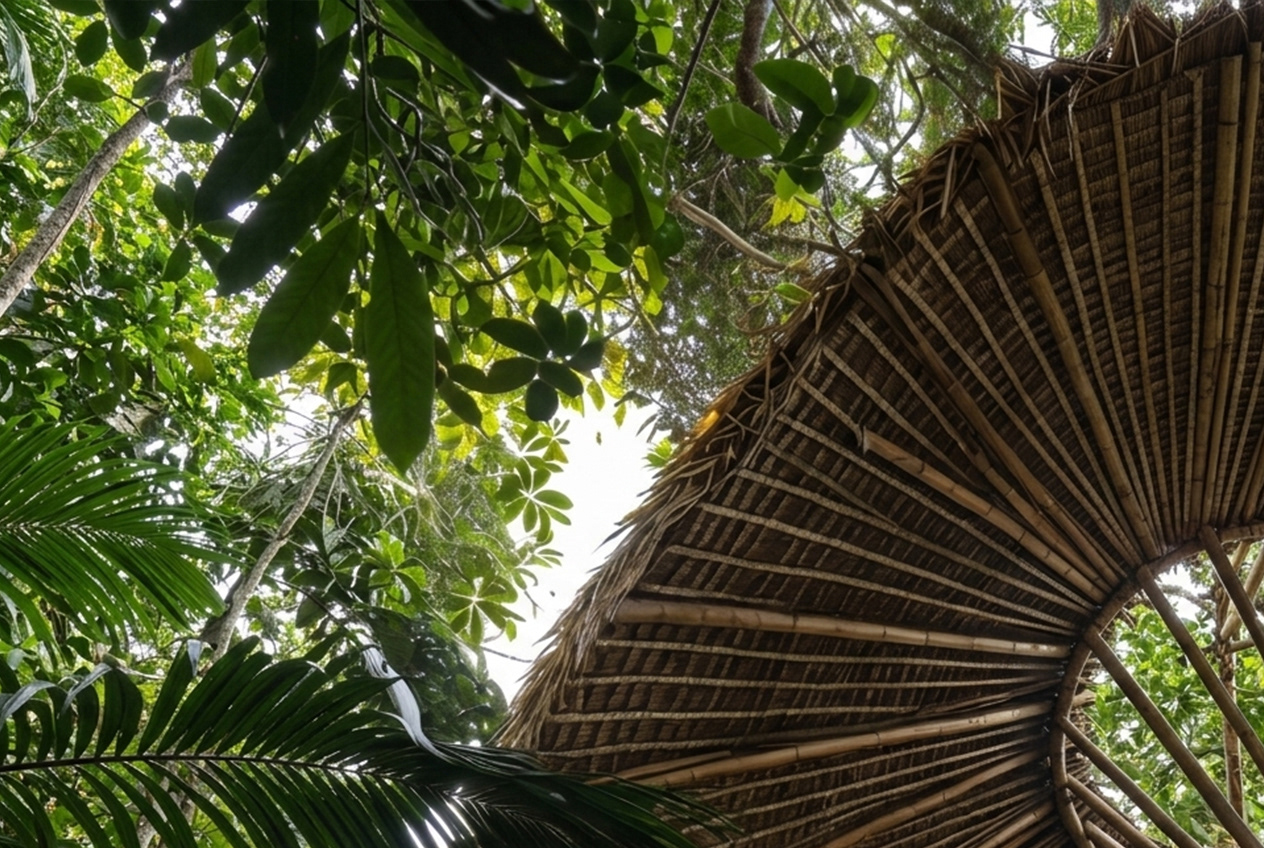
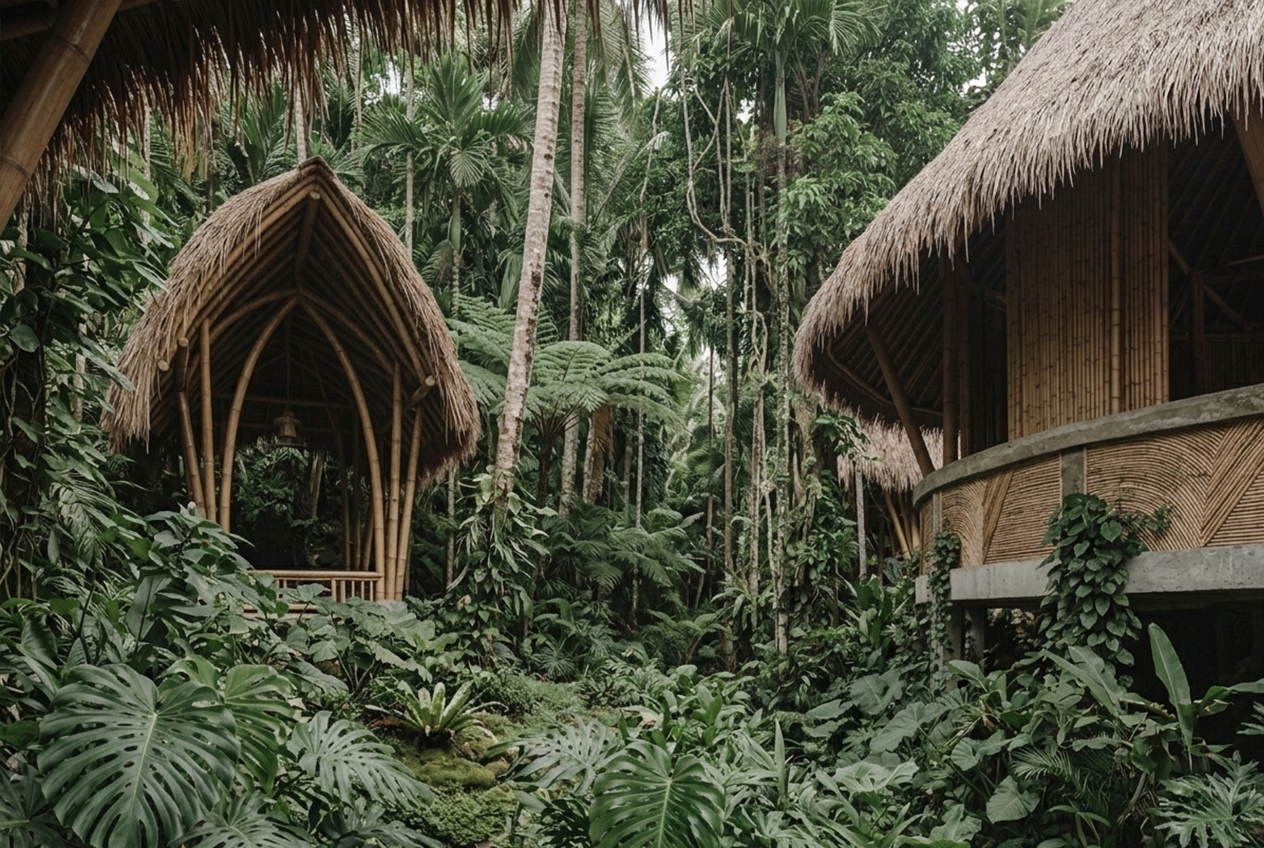
Around the concrete core a ring tightens, and from it a bamboo roof structure spreads outward in radiating lines, thatched with palm leaves. It is a light shell — seasonal, repairable — made by hands from here, of materials from here.
If concrete is memory and permanence, the thatch is what is alive and replaceable. The house breathes between the two.
⸻
⸻
The project deliberately reaches for what the island does best: concrete, timber, weaving, traditional craft. And because craft here can be unpredictable — the project doesn't fight it, it takes it in.
⸻
⸻
The trace of burned wood, the texture of the formwork, the hand-woven wall: no two will repeat. Each of these houses will be a little different, because here imperfection is not a flaw — it is the signature of the place.
⸻
RENDERS - TOMASZ BUDNICKI